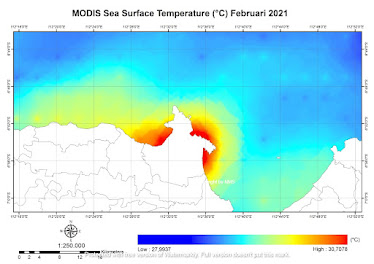
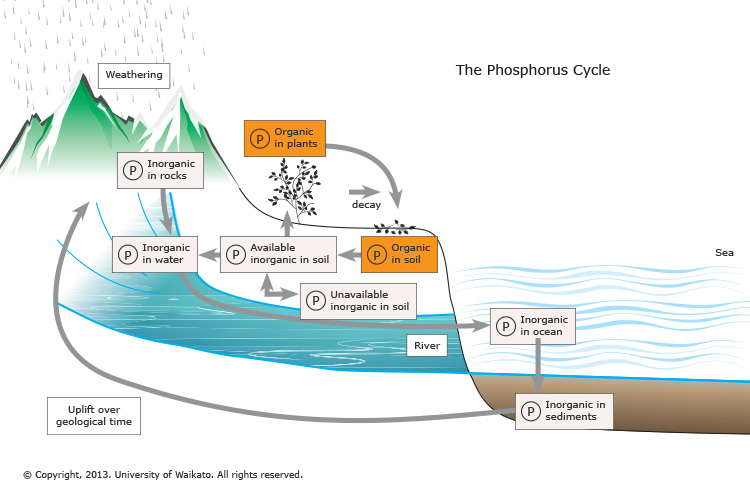
It is a well known that the excess amount of nutrients (especially because of algae) in the waters are known as hypertrophication/eutrophication. The water condition with unbalance nutrients caused algal blooming. In fact, the composition of nitrogen (N), phosphorus (P), and silicon (Si) should be 16:1:1. Therefore, the imbalance proportion of these substances lead to an alteration of plankton succession process. N and P are important elements to algae. On phosphorus cycle, the organic N compound from death plants and animals was decomposed by decomposer to be anorganic phosphorous; dilute inside soil water or sea water and settle on sediment. After being eroded, this material would be permeated by plants and phytoplanktons in oganophospate form. Nitrogen cycle is not much different. In this cycle, there is nitrogen fixation process from atmosphere to the land, settled on soil. Mineralization as well as nitrification-denitrification process are also occur.
If these natural mechanisms work in harmony with balance composition, there would not be any conflicting matters. However, since the 20th century, this equivalence nutrient composition in the water, especially marine environment, were transformed differently. The N and P contents were increased, waters became eutrophic due to phosphorus and nitrate total concentration were 35 to 100 µg/L. Fish and other biota in the ecosystem chains were lost resulted in water ecosystem balance distraction.
People assumed domestic wastes from land is the main reason of this incidents. Well, yes it is. Long term investigation on various lakes in the world delivered conclusion that phosphorus is the main element neeeded by primary nutrient producers (C, N and P) on hypertrophication process. Results showed that while C and N were added on the lake, the algal blooming was not occured. Nevertheless, in another lake, the addition of P in the water (phosphate and slight amound of nitrate) is able to induce blooming. So why this phosphate is abundant?
Generally, 10% of phosphate was originated from natural water process, 7% from industry, 11% from detergent, 17% from agricultural fertilizer, 23% from human wastes and 32% from husbandry wastes. Thus, all organisms on the land donate these phosphates. Higher population generated to higher phosphate thrown away in the water and marine environment, resulted in higher hypertrophication possibility.
The interesting point is hypertrophication create a significant impact in ocean and coastal environment. On nitrification-denitrification process, the decomposing step by Nitrococcus, Nitrosomonas and Nitrobacter bacteria occur aerobically resulted in oxygen depletion. Decomposing products will formed mineral mud and create silting in the water. Another consequences are water colour was greenish, smells not good (ammoniac stink outcome from aerobic decomposition) and water turbidity. The results are clear, ecosystem is destroyed and all organisms are dead.
Water hyacinth (Eichhornia crassipes) and harmful blue-green algae (Cyanobacteria) will invade aquatic environment. The latter contains specific toxin which able to bring serious poisoning to human and animal. The water quality becomes zero. On social-economic side, hypertrophication eliminates conservation worth, aesthetics, recreational and tourism, thus, require much funding to solve it.
Developed countries, such as USA and european countries, already had proposed hypertrophication as environmental agenda with creating a special committees to find the solution of environmental pollution. In principal, they are very restrictive to phosphate amount in the aquatic and marine environment. They also labeled phospate free or environmental friendly to daily home products and reduce phospate and nitrate compound by specific treatment series. In Chinese and Korea, they use active bacteria—algae eaters—to clean the pollution.
In the relation with global warming, hypertrophication is two sides of blade, connecting each other with positive and negative impact. Cyanobacteria has chemical protection such as toxic and bioactive substances which is able to attack grazers: zooplankton Daphnia spp and other competitors. Its tolerance to ultraviolet radiation (containing shironine, mycosporine-glycerine, poryphyra-334 and scytonemin) generates it to live in high illumination, tend to blooming on warm temperature. Of course, the existance of global warming lead to the increasing of hypertrophication. These resulted in algal growth period becoming longer.
The algal blooming is effecting its toxic blooming. In Pensacola Bay, the abundance of Cyanobacteria Synechoccus at estuarine water created a red tide and induced a massive death of zooplankton and other biota. In Canada and Alaska coastal area, Cyanobacterial blooming leaded to new diseases on human, Paralytic Shellfish Poisoning (PSP), resulted in gastrointestinal and neurologic disturbance because of consuming toxic shellfishes. The exacerberated situation was if carbon dioxide was absorbed too much, seawater will became more acid. Shellfishes are filter feeder organisms which live in photic abyssal zone. They need calcium carbonate (CaCO3) to create their shell. The acid environment will easily make them absorbed it to strengthen their shell and make them much more poisonous.
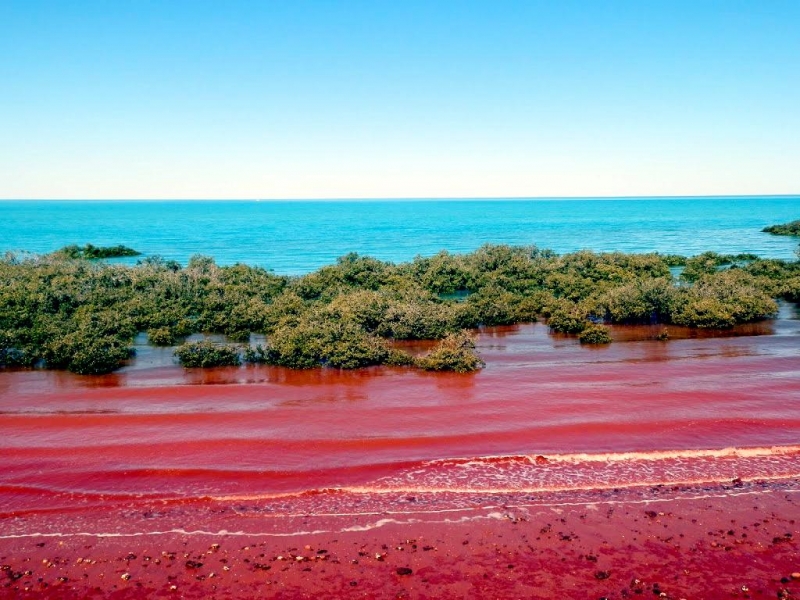
Scientist has found carbon absorption of algae is much more bigger than carbon absorption of tree. Algae was also found as the first plant in the world that could produce oxygen. Surprisingly, European scientists incorporated in EIFEX (European Iron Fertilization Experiment) was deliberately inserted iron substance (Fe) to combine with phosphorus so that the photosynthesis process will be bigger and algal blooming will be occured. When the Antarctic was left to its natural mechanism, algae grow reasonably. After Fe addition, the hypertrophication was happen and increased algal photosynthesis. During this step, carbon dioxide from the atmosfer was absorbed through the excess algae. Furthermore, when these algae died or being eaten, carbon will be settled in the base of ocean, brought greenhouse gases within, reduced the temperature, and cooling the world!
Like Cyanobacteria, on Arctic Ocean, the one-celled-algae phytoplankton are able to soak 45 billion ton of carbon dioxide every year and deliver half of oxygen supply in the world. The first phytoplankton blooming indicated 400 ppm carbon dioxide reduction in the air, reduce a slight global warming in the world. In fact, the old satellite imagery described 10 times lower in investigating this phenomena; suggesting that algal abundance below the ice layer of Arctic Ocean was even more. In 2010, NASA found 100 km of phytoplakton under the ice near Alaska. Beforehand, the scientists assumed that the ice was blocking sunlight, which is needed for plants to grow on. But currently, they hyphotized that ice coloumn was melting and the sunlight was concentrated like magnifying glass. The global warming causing phytoplankton bloom two times faster. Although algae (phytoplankton in it) are able to absorb carbon massively, they also have higher effects for migrating birds and whale or the other marine organisms if left longer.
The hypertrophication problem is a dilemma. Although the harmful algae is only 2% from all species, they abundance will disturb food chain equilibrium. Its so irony, without algae, people cannot live constantly. Algae is everywhere, not only in the marine or other water environment. All living creatures including human need a healthy oxygen produced by algae. Nevertheless, their blooming and global warming existance endanger all living organisms in the world. Therefore, this obstacle need a continuous action to finish the problem. Reduce human pollution, reduce inorganic wastes, buy environmental friendly products, cultivate several plants on every houses, reduce greenhouse, are adequate action to diminish the global warming and algal blooming. Lastly, hypertrophication phenomena, wherever it is, of any size, will deliver a great influence for natural ecosystem and human life. LET’S SAVE THE WORLD!!!